Saturday, March 3, 2012

The Language of Southern Food...Brunch

Every language consists of parts of speech, such as your nouns, adjectives, and adverbs. In the South, our cuisine has developed into its own language; food is used to comfort, to welcome, to reminisce and to connect people to an often misunderstood region of the country. This language of Southern food consists of parts of speech, just like any other language, yet instead of adverbs, nouns, and verbs, the Southern food lexicon consists of brunches, bar b que, fried goods, sides, cocktails, and desserts. And rather than relying on teachers, grammar book or dictionary to teach the language, we in the South rely on our own mothers and grandmothers, and neighbors who have passed down recipes for decades. Instead of a dictionary, we have our own cookbooks, recipe boxes, scraps of paper, and our own handwriting scribbled beside these age old recipes. And instead of dialects, we have different renditions of our basic parts of speech that depend on where below the Mason Dixon line you reside.

 a key component of speech 
Our way of life, history, and cultural traditions can all seem be communicated through this Southern culinary language. Even when one I would put it as we cannot understand our the dialect, they we can understand a plate of ______ (everyone has their own iconic dish to insert in this blank)and for a brief moment understand with the culture and people associated with it. No, they may never understand the hows or whys ingrained in the dish, but the flavors and aromas allow them to literally taste a truly unique way of life. It's no wonder that Southern cooking has become such a buzz word in kitchens throughout the country. Therefore, to stray away from plants for a few articles, I've decided to focus on some key parts of speech in our language of Southern Food. We'll start at the beginning of the alphabet with brunch.

my frustrated sous chef

Brunch. Something we from the South are very familiar with. We know the best places to go, the best dishes to serve, and the best cocktails to go along with it. We have more variations of the breakfast casserole than varieties of Camellias. Hosting brunch is simply an understood talent that one must acquire to have any chance of survival within our Southern societies. Hosting is of course This hosting talent is easy when the guest list includes your closest friends and neighbors, but when it involves a guest list from across the country, brunch takes on an entirely different meaning. 

Margaret Affleck's Breakfast Casserole 
(Dedicated to all of Maggie's variations of breakfast casserole on Christmas Eve after multiple cocktails...)

  • 1 lb. breakfast sausage
  • 1 (13 oz.) can evaporated milk
  • 1 1/2 slices bread, cubed
  • 5 eggs
  • 2 C. cheddar cheese, grated
  • Season to taste
Prepare evening before. Cook sausage and drain thoroughly on paper towels. Beat the 5 eggs and evaporated milk slightly. Add sausage, cubed bread and cheddar cheese. Pour into 9 X 9 in. casserole and cover with plastic wrap. Bake uncovered for 45 minutes or until firm, in a preheated 350 degree oven.

A few weeks ago, some dear friends of the family were hosting this very guest list; a list that ranged from South Carolina to California. They asked the Pegs to help with the flowers for the evening party and to handle the brunch for the following Sunday morning. The idea was to represent the Delta through the flowers and the food. Given our past experiences, the flower part was easy, but the challenge was to communicate our way of life through our native tongue, brunch. 

a lighter brunch accent

To speak the language of Southern food for our guests, the absolute right recipes had to be utilized for the brunch. Pegs and I spent hours polling our friends, our cookbooks, and the internet to come up with options. We settled upon a quintessential choice in the brunch vocabulary of shrimp and grits. We also made a new introduction, a scalloped. These were to be accompanied by an assortment of homemade muffins, mini muffins because petite is chic when it comes to brunch, and fruit skewers, because despite certain prejudices people carry about the South, we want you to know that we can do "the healthy" too.

Scalloped Pineapple: 
  • 4 cups fresh bread, cubed
  • 1 20 oz. can pineapple chunks, drained
  • 2 cups sugar
  • 3 eggs, beaten
  • 1 cup butter, melted
Toss together bread and pineapple. Place in greased baking dish. Combine remaining ingredients over pineapple. Bake at 350 for 30 minutes. Casserole can be made up and refrigerated overnight before baking. Reheats well.

Now, obviously if I'm writing an article completely on brunch, I have given it more thought than it probably deserves, but the shrimp and grits discussion became a discourse between my entire family;  my Dad, complaining that you ruin perfectly good grits with shrimp and the other "stuff:" that goes in there, my Mom, worrying that a group from across the country would only eat the shrimp, and me, theorizing on the entire concept while trying to keep the 8 cups of grits from sticking. Throughout this discourse, the idea was also brought up, that shrimp and grits has become almost a status symbol in the South. It is what you serve when trying to impress someone, which in this case we were. But like so many other quintessentially Southern foods, shrimp & grits represents the more humble history of our cuisine. I mean our humble beginnings cannot descend past grinding up corn, mixing it with water and eating it. Only when we added shrimp and white sauce did it begin to climb the ranks into a cosmopolitan, must have Southern dish.


Shrimp & Grits
Serves 4 (multiply according to your guest list)

Grits: 
  • 14 oz. chicken broth
  • 3/4 cup half and half
  • 3/4 tsp. of salt
  • 2 cups of water
  • 1 cup grits
  • 2 T. butter
  • 3/4 cup white cheddar
  • 1/4 cup Parmesan
  • 31 t. cayenne pepper
  • 1 t. paprika
  • Tabasco
  • Salt/Pepper
Bring first four ingredients to a boil in medium saucepan; whisk in grits gradually. Reduce heat and simmer, stirring occasionally, 10 minutes or until thickened. Add remaining ingredients and keep warm. 

White Sauce: 
  • 2 tablespoons butter
  • 2 tablespoons flour
  • 1/2 teaspoon salt
  • 1 cup milk or 1/2 cup evaporated milk and 1/2 cup water
Melt butter in a sauce pan and whisk in flour and salt until smooth. Gradually stir in cold milk, cooking over direct heat and stirring constantly until sauce boils; reduce heat slightly and continue to stir until sauce becomes smooth and thick. When sauce thickens, simmer for an additional 10 minutes over very low heat, stirring occasionally. Stir carefully to avoid lumps. If sauce becomes lumpy, use a stick blender or rotary beater to blend out lumps or else press through a sieve. 

Shrimp: 
  • 3 slices bacon
  • 1 ound shrimp, pealed and deveined
  • 1/4 tsp black pepper
  • 1/8 tsp. salt
  • 1/4 cup all purpose flour
  • 1 c. sliced mushroom
  • 1/2 c. chopped green onions
  • 2 cloves garlic, minced
  • 1/2 cup chicken broth
  • 2 tablespoons fresh lemon juice

Sprinkle shrimp with pepper and salt; dredge in flour. Saute mushrooms in hot bacon drippings 5 minutes. Add green onions and saute 2 minutes. Add shrimp and garlic for 2 more minutes, until shrimp are lightly brown. Stir in broth, lemon juice, and hot sauce3 and cook 2 more minutes, stirring to loosen particles from bottom of skillet. 

Combine Shrimp and White Sauce over grits. Top with crumbled bacon. 

*note: no pictures were captured of the shrimp and grits due to the fact that I was on a time crunch....

Personally, shrimp and grits is more like the great mediator between Southern cuisine and all the others. It gives us a chance to convince people to sample the most southern side of all, grits, by adding a recognizable protein to it...shrimp and in some cases (our case for sure) bacon. The shrimp is key because unlike beef or chicken that can come from who knows where, a pound of Gulf Coast shrimp ties the dish tighter to our region. Were we to just have a dish of hot grits, I am most certain it would have been bypassed by the out of towners. Instead, we provided a taste of both history, tradition, and regionality in a relate able manner for our interstate guests and they ate it up...Grits from a 300 year old mill (Sciples in Dekalb, MS), which one guest asked if the same person had been operating the mill for that long...and shrimp from our Gulf Coast, combined in a recipe that has been passed down and around for decades. And for a brief moment in time, we were all speaking in the exact same language and the exact same dialect.

So whether you're fully fluent in the Southern Food language or simply starting to translate, jump start your education with an early spring brunch and begin to utilize some of our most favorite parts of speech.

Bloody Mary:

Zing Zang's Blood Mary Mix
Vodka (proportion of mix to vodka is up to you)
Pickled Okra garnish (don't even try celery, it will only just get left on your side tables and stain your linens)

Friday, February 10, 2012

Bypassing the Roses

Southern women are hard to impress, especially when it comes to Valentine's Day. Any man in the life of a Snipes lady is up for a real challenge when it comes to Valentine's Day. All three of us have worked/still work in the wonderful world of flower arranging and have worldwide access to any flower we could want at a wholesale price... When flowers do actually arrive at one of our doorsteps the instinctive question is to immediately ask "Who did these?" and "How much did you pay?" We're not trying to be tacky here, we're just in the business and need to know our competition. 

 very cute, but not gonna cut it for us...

Sound familiar? Coming up with a great Valentines arrangement is pretty much a wasted effort for a gardening or flower enthusiast, so why not bypass the roses with a great gardening book this year? Not to sound like a hallmark card here, but this holiday is a great way celebrate their love of plants with a great little something for the bookshelf; something that will last for years to come.

I utilize my own gardening library everyday of the week. My most beloved garden/plant reference book was given to me as a graduation gift from dear family friends, and I love opening it to their note on the inside cover. There is something about the warm, cozy emotion that arises when you find a note inside the dust cover. Some of my all time favorite cookbooks are vintage ones passed down for generations that have others names inside and handwritten notes on the recipes inside. So what better way to pass along the warm fuzzies to someone than through a great gardening book? The Pegs and I have come up with our list, and would love any more suggestions that you may have.

Here are some of my suggestions that have been give to me throughout the years: 

First up, this is a new release on the book store shelves is from a Mississippi author who actually taught with my mom in Starkville before I arrived on the scene, Laurie Parker. Laurie has written a number of books, but the new Garden Alphabet really takes the cake. You may know her other works such as, Everywhere in Mississippi, A is for Angels, All Over Alabama, and the Louisiana Alphabet.  The Garden Alphabet is great for all ages, not only does it take you through plant names and gardening terms, but provides beautiful collages for "I Spy" opportunities.

 
The Southern Living Gardening Book, or my personal gardening bible resides right beside me at all hours of the day. It has been around for years in multiple editions, but a definite must for a garden reference.

Jack enjoyed the corner of this book as a puppy...


Beatrix Farrand Private Gardens, Public Spaces is the newest addition to the collection. It documents the works of Beatrix Farrand who was one of the first great lady Landscape Architects. For those of you in the DC area, she designed Dumbarton Oaks. With stunning photographs, garden layouts, and great historical tidbits, this book is a true source of inspiration for any landscape designer or gardener.


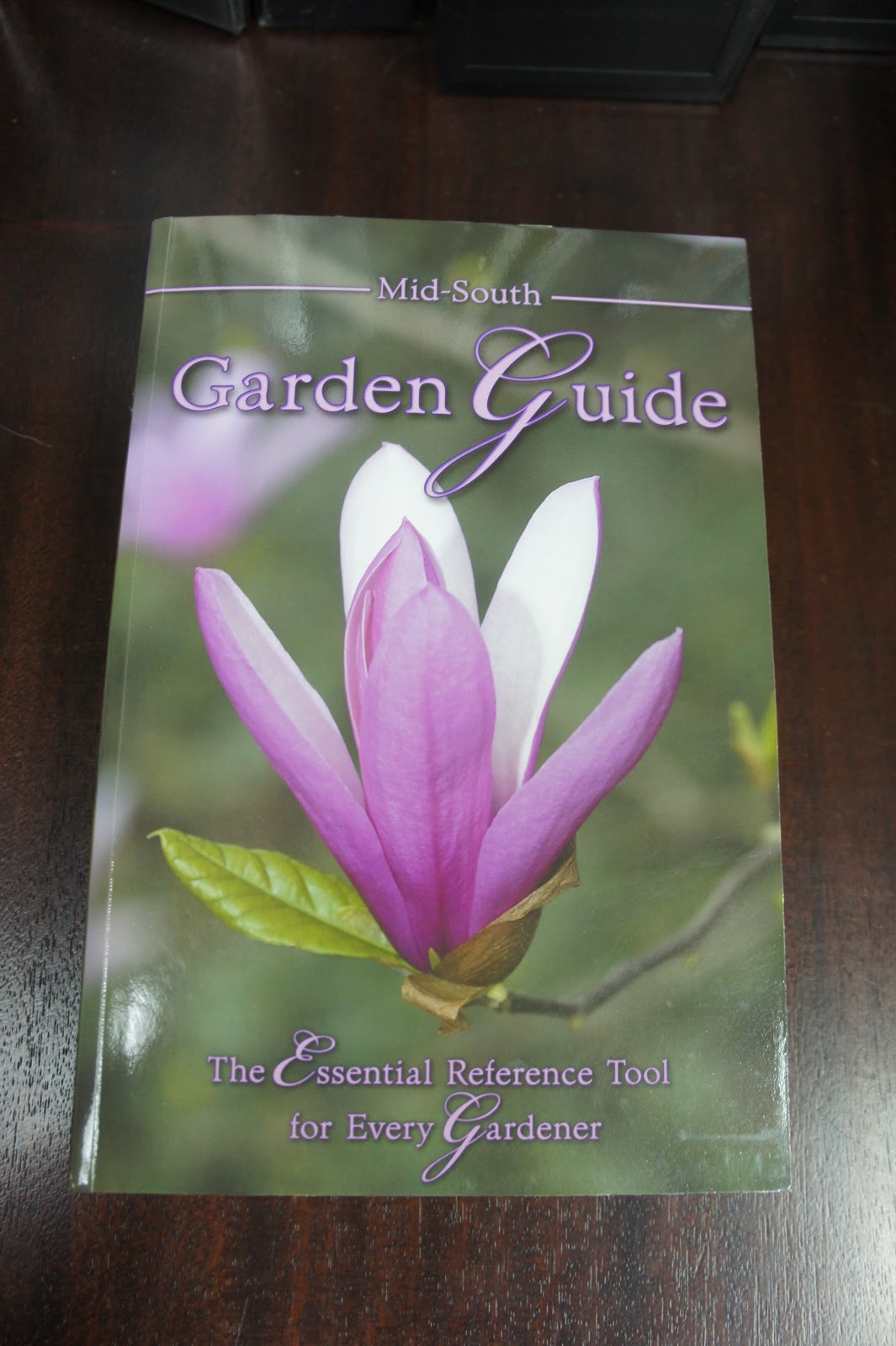
The Mid South Garden Guide, as it says is the Essential Reference tool for any gardener at any stage in his/her career. It covers everything from lawn care to nomenclature to plant selection guidelines.

Rain Gardening in the South,  was given to me by my graduate professor, Anne Spafford, who is one the authors. If you have a blossoming conservationist in your life, this is the book. It is an exceptional guide to establishing a rain garden in your own yard, as well as an excellent planting design reference.  (more to come on rain gardens later...)


Check your local bookstores for availability. Don't have a book lover you're trying to impress? Think outside the heart shaped box with a wrapped up package of spring bulbs to plant outside and every year when they pop up, your "hunny" will remember them as her most favorite Valentine's gift. So whether it's a lovely and lasting book with a note in the cover or some spring bulbs to pop up every spring, bypass those roses with a lasting gift this Valentine's Day.

Thursday, February 2, 2012

Hotflashes & Heritage Plants

 my office thermometer (in the shade)

For all of my friends that live outside of the Southeast, I am not trying to brag...really, I'm not, so I will go ahead and apologize if this post is a tease. For those of you who live within the Southeast and haven't been outside this month...shame because we have been experiencing quite the hot flashes (and I don't mean the ones that grace we Southern ladies in our midlife). We have been consistently above our average temperature of 53 degrees for a few weeks now with more warm days than cool days. Today's high of 74 is right below the record of 78. It's a strange sensation to walk outside and meet a blanket of warm, spring-like air. Although my original intent was to devote the last week of each month to highlight a conservation technique for you landscape, it would be a shame for me not to acknowledge what is happening in our landscapes as we speak. 

It seems that many of our Southern heritage plants are loving the hot flashes of warm weather.  The warm temperatures have forced these spring bloomers into overdrive. While many species are on schedule to bloom between January and February, there are some that have jumped the gun. Not only that, but the warm temps are providing us with some excellent blooms throughout our yards from species who preform best in January/February. The warm temperatures are preventing frosts that inhibit blooms so often on many of these plants. The following are the "usual suspects" of early spring to consider incorporating into your yard for a flowering accent:

Forsythia
Forsythia x intermedia 
(the most widely grown species)


A staple to the most Southern of gardens, Forsythias can grow anywhere between 7-10' tall depending on the species. They require regular water, full sun, and can typically be found in hardiness zones 8-3. 


Star Magnolia
Magnolia stellata

This petite little ornamental tree grows up to 20' tall and 10' wide. The star magnolia's blooms are usually the first to appear in late winter/early spring. Some varieties are even known to be fragrant.


Winter Honeysuckle
Lonicera fragrantissim
(a favorite Latin name of mine for the sole purpose that it ryhmes)

The limbs of the winter honeysuckle can reach up to 8' tall and wide. It is a semi-evergreen and thrives in zones 8-3. The flowers bring a distinct citrus aroma that is reminiscent of fruit loops. Consider it for use in areas that have full sun to partial shade and that receives regular water.


used as a screen/border along a fence line in my neighborhood; beautiful combination with the dark evergreen of the Southern Magnolia.

Flowering Quince:
Chaenomeles speciosa

This flowering shrub is usually the first on the scene in January and have been loving the warm temperatures. They are in full bloom throughout town. It's one of the easiest shrubs to grow, requiring only full sun and well drained soil. It can reach over 6' tall depending upon variety. Bloom colors vary from white to red to many shades of pink. Flowering quince is not the same as common quince (Cydonia oblonga). Check the variety for color and fruit production.


Daffodils, Narcissus, Jonquil
Narcissus spp. 

One of the most beloved spring bulbs around and a definite must for any garden. They can be found all throughout the South, especially popping up in old homesteads. They require full sun to partial shade and ample water during growth and blooming. For technical purposes the term "daffodil" refers to the large bloom" and the term "jonquil" refers to the the smaller blooming variety. 


 Jonquil

Daffodils springing up amidst Asiatic Jasmine. Consider this technique for your bulbs: Plant them with a groundcover. This way the bulbs come and go, but the groundcover creates a consistent backdrop.

 
Daffodil


Tulip Tree
Magnolia x soulangeana 

Also called Saucer Magnolia, this guy is another key deciduous Magnolia to consider. Loving some full sun or partial shade, these Magnolias can reach 25'x25' and need at least 3-5 years of maturity to bloom.


Bridal Wreath Spiraea
Spiraea prunifolia 

A beloved spiraea with arching branches that reach 6-7' tall. Bridal wreath spiraea is a clump forming plant that requires full sun or light shade with regular water.  This petite little Southern favorite is normally a mid-spring bloomer that beckons the start of turkey season, according to my father. However, this one is getting a jump start and beginning to set blooms in early February. 


Carolina Jessamine
Gelsemium sempervirens
 
An actual native plant to the Southeast, Carolina Jessamine can be seen covering our lamp posts, mailboxes and fences all throughout the Southeast. An excellent vine do to its evergreen nature, drought tolerance in maturity, and adaptability to sun or partial shade. It can be found thriving in zones 9-4. Normally a late February bloomer in this area, I noticed this one ready to hit full bloom within the next week or so. 
Note: all parts of this plant are poisonous if ingested. 
 

Now, let's discuss how to incorporate these guys, which are the cornerstones to traditional southern gardens, into your landscape. While these species are stunning in the early days of spring, they tend to blend into the landscape during the rest of the year. Consider mixing them in with an evergreen border or screen for a splash of color amidst a sea of green. Another option would be a grouping of 3-5 within a bed. The goal is to have them in an area where they can pass the spotlight along once other shrubs/trees begin to bloom. Although they are often used as stand alone/specimen plants, their beauty is fleeting and they leave much for desire during the remainder of the year.
And if this weather has sparked your interest in beginning some spring landscaping, February is an excellent time to prune, yet stay away from spring blooming shrubs such as hydrangeas, camellias, and azaleas. These plants bloom on old growth, so if you prune them now, you will be chopping off their blooms for this year. Try pruning while they are blooming. This way you get a two for one deal, cut flowers & your pruning chore done with.

February is also the best time to cut back your monkey grass, liriope, and other ornamental grasses that have overwintered. 

In the case our temps plummet next week, as they have a tendency to do in February and March, we may all be singing a different tune. But until then, enjoy this hot flash and some of our longtime Southern favorites and their blooms throughout are gardens.

References: The Southern Living Garden Book

Tuesday, January 24, 2012

Pecans, Acorns, & Berries, Oh My


 Overflowing 40 lb. bag of Pecans

Side Note: Before we get started, let's set the record straight. This article talks about our Pecan crops. As in a Pe-cahn, not a Pee-can. Because as my great grandmother always said, " A Pee-can is something you find under your grandmother's bed." 

This Fall/Winter the Delta experienced a somewhat rare natural phenomenon; one whose occurrence remains a mystery to those of who study the natural world for a living...money growing on trees. Yes, it's true. Our pecan and acorn crops were quite prolific this year. Align them with prices of .85-$1.00/lb and you pretty much have money growing on trees.

One of the Pecan pickers for our orchard at the farm

As it turns out, we have been experiencing a "mast year" for our native nut producers.  A "mast year" is when fruit producing trees and shrubs produce a significant amount of fruit (mast). This process can also be called masting. It's as if the stars aligned just right causing our oaks to produce record numbers of acorns and our pecans to produce record numbers of pecans.

What causes a mast crop?
Without going into grave ecological detail, the oldest theory is based on the fact that seed output varies because the plant's available resources vary. And based on our drought conditions (lack of the water resources) this summer, it makes sense that these plants felt threatened and went into mass production mode...a natural "Hail Mary" for reproduction.

Signs posted at the Fulton's orchard

The mast year proved to be a bit of a headache for those who own pecan orchards or who deer hunt. Throughout the highways of the Delta, pecan trees are littered with "no trespassing" signs. To those not from the area, you may think we don't approve of others climbing our trees or that our dogs reside in our pecan trees... But in a year when money did practically grow on trees, "no trespassing" was the closest manufactured sign we could get to "don't pick my pecans". I had the pleasure of visiting with Martha and Roy Fulton who have utilized these signs with success. The Fultons are still picking up pecans in their orchard on Highway 82. They had gathered a draw dropping number of pecans from their 1 acre orchard. This was after they had lost some trees due to the seep water from our high water levels this spring. Their orchard backs up to the levee. The Fulton's have had issues with people not only stealing pecans, but littering and  taking items from their barn.

 Martha & Roy gathering a day's harvest

If you were to decide to gather up some pecans, the state of Mississippi would not tolerate it. According to my friend, John L. Herzog Jr, Esq., at the District Attorney's office in Greenville, the stealing of pecans had the police and sheriff dispatched on numerous occasions. So we decided to check out the statute:

§ 97-17-89. Trespass; destruction or carrying away of vegetation, etc. not amounting to larceny 

   Any person who shall enter upon the closed or unenclosed lands of another or of the public and who shall willfully and wantonly gather and unlawfully sever, destroy, carry away or injure any trees, shrubs, flowers, moss, grain, turf, grass, hay, fruits, nuts or vegetables thereon, where such action shall not amount to larceny, shall be guilty of a misdemeanor, and upon conviction shall be fined not exceeding five hundred dollars ($ 500.00), or be imprisoned not exceeding six (6) months in the county jail, or both; and a verdict of guilty of such action may be rendered under an indictment for larceny, if the evidence shall not warrant a verdict of guilty of larceny, but shall warrant a conviction under this section.


 Ilex latifolia (Lusterleaf Holly)

Yet, it appears this mast year in the Delta is not just within our tree species. The woody ornamentals, such as Hollies, Ligustrums, Cedars, Nandinas and any other species that produce a fruit have been following in step with our tree species and seem to be laden with berries. Berries in the winter time are always beautiful, as they provide vibrant pops of color amidst a sea of browns, grays, and deep greens.  Not only do they provide a sight for sore, cold eyes, certain species provide food for many of out native bird and animal species.
Nandina domestica (Nandina)
With some nibbles missing...

And although the mast crops caused problems for some farmers & sportsmen, it created some stunning landscape shrubs for homeowners. Whether it is a mast year or not, plants that produce berries are always a great choice for you landscape. As I mentioned earlier, they are a beacons of color during these months when we have some extremely dull colors out there. Not only that, but many of our berry producing plants are excellent evergreen selections for screens, foundation, and structural plantings.

Ligustrum lucidum (Glossy Privet)
Enjoy the berries, but don't plant....

Ilex decidua or Ilex verticillata...Possumhaw or Winterberry
Excellent deciduous holly selections. 

Ilex Cornuta (Chinese Holly)
Protected by this momma mockingbird 24/7.

The American Horticulture Society recommended a few more shrubs with fall/winter berries in their latest issue of The American Gardener:
Hollies (Ilex spp.)*
Firethorns (Pyracantha spp.)
Chokeberries (Aronia spp.)*
Spicebush (Lindera spp.)*+
Beautyberries (Callicarpa spp.)*
Mahonias (Mahonia spp.)
Sumacs (Rhus spp.)
Viburnums (Viburnum spp.)+

*Indicates native species available
+Indicates certain species are great for attracting bird

Just when you thought landscapes were dull this time of year, they can really surprise you. Take a look around your neighborhood and enjoy the shrubs with beautiful berries and trees with an abundance of fruit, but whatever you do, don't take them for yourself because we carry shotguns around here.... 

Thursday, January 12, 2012

Plants to "Tie You Over"

In the South, our days revolve around meals. At breakfast, we debate what lunch may be and and lunch we debate our dinner selections. It's easy to say, that down here we are always looking ahead. Yet, for the in between times, when hunger strikes, every southern mother, grandmother, or head cook can be heard saying, "just eat a little bite to tie ya over." (In some areas the saying goes "to tide you over", yet as an Auburn graduate, I avoid the word tide whenever possible). Where this phrase originated is a myth, but the saying has made it onto the pages of Urban Dictionary. Here it is defined as a verb, meaning (tr) to help to get through (a period of difficulty, distress, etc.). A saying with serious implications if you ask me.


Well this time of year, we are all seriously getting tired of the gray, cold, damp weather that seems to move into the Delta and even more sick of the teasing 70 degree days that hide on the calendar.  During these days, we get a brief glimpse of spring temperatures, just to be bombarded with sleet the next day...all part of living in the Southeast. So what can be done to "tie us over" until Spring really arrives? The answer is quite simple, bring some plants inside; small potted ones that can adorn your table, desk, or bookshelves. This way, little glimmers of what to come are visible throughout these winter days. 


We've all received containers, pots, pottery, and other objects whose sole purpose is to hold something. They've appeared as Christmas gifts, wedding gifts, or "had to have it" gifts to ourselves. Now, instead of sitting empty, they can hold a glimpse of spring a get you through the distressing winter days that are here for another 2 months.


For my office and around the house, we visited Ms. Morgan's flower stand at the local Kroger, where you can find a great selection of bulbs. We also checked out the selection at other local nurseries and garden centers and came up with a great mix of green plants, and spring bulbs. Don't be afraid to try color and texture combinations when it comes to green house plant selection.
 

So, as we do in the South, start looking ahead to those vibrant spring colors, but until then find a little something to "tie ya over."

Don't forget to check and make sure your plants will have adequate drainage and to remember to water!  

Thursday, January 5, 2012

A New Year, A New Landscape...


By now, we're all quite sick of the old saying " a new year, a new you". We survive the month of Kay Jewelry commercials in December just to be bombarded with self improvement and weight loss commercials in January. However, this year,  I've decided to take the whole improvement theme into my own hands and throw a new spin on an old saying. "A new year, and a new landscape....

container,shrub, walkway, etc" Notice I'm not suggesting tear everything out to start completely afresh (although you can), but allowing you to fill in the blank on what simple task could be done in your own landscape.  As it turns out, our home landscapes are outward expressions of ourselves (kind of like our clothes). And not to add any pressure, but one can say a lot with landscape choices and features. Maybe you've read about a herb gardens for years, but never started on? Maybe you've always wanted  some containers on your patio, or wanted to incorporate a water feature (big or small), or maybe it's adding some native plants to your existing beds?  Why not this year, and why not now resolve to make these improvements to you landscape? 

To the non-garden enthusiast, any landscape task besides mowing the lawn can seem overwhelming, yet with the right planning and guidance anyone can develop their own version of a green thumb. The key is to start planning as soon as possible. Early planning can help avoid any hidden obstacles that hinder so many potentially great projects. Sure, it's January, but now is truly the best time to start planning and get the ball rolling so you will be ready for spring.

Start by making a list of the components of the project. Let's say we want to add a new vegetable garden to our landscape. What really makes up a vegetable garden? Light, water, soil, plants, and the tools to create it.

Light- Where will the bed be located? Does any pruning of trees need to occur for there to be ample light? ( remember: a sunny spot in winter, may be shady as soon as the leaves reappear on trees)

Water- Is the bed near a water source? Maybe you need a longer hose or need to add a sprinkler head?

Soil- I will always recommend a soil test through your local extension agent before creating or modifying your beds. Super easy and one of the most important preparations you can do!

Plants- Decide now what you want to plant. Will the local nursery provide your vegetables or will you star with seeds?

Tools- Do you have a shovel? If you need to do some pruning, are your snips ready? What about gloves? A tiller?

Now after checking off your own project list and as soon as the warm weather hits, you're ready to go!

Some simple brainstorming and game planning in January and February can lead to some beautiful garden results in May and June.

Now, on another new year note there will be some great articles to look forward to. I've expanded the horizons to incorporate Southern tales and spotlights to our gardening and design articles. And now, some hints of what to look forward to in 2012:

Spotlight on home conservation techniques, going green in the new year
Plants that every yard needs, if company is coming
Incorporating vegetables into your existing landscape
What's in season?
Creating the perfect courtyard
Overlooked landscape icons
Garden tool management
Terrariums
Etc, etc, etc

Any thoughts, requests, or inquiries please don't hesitate to email them to me at brantleysnipes@gmail.com or tweet them in to @brantleysnipes.


And, finally, if this article has failed to inspire any landscape creativity, Brantley Snipes Landscape Design LLC is now officially up and running and I would be delighted to help! Book now for spring containers and beds.